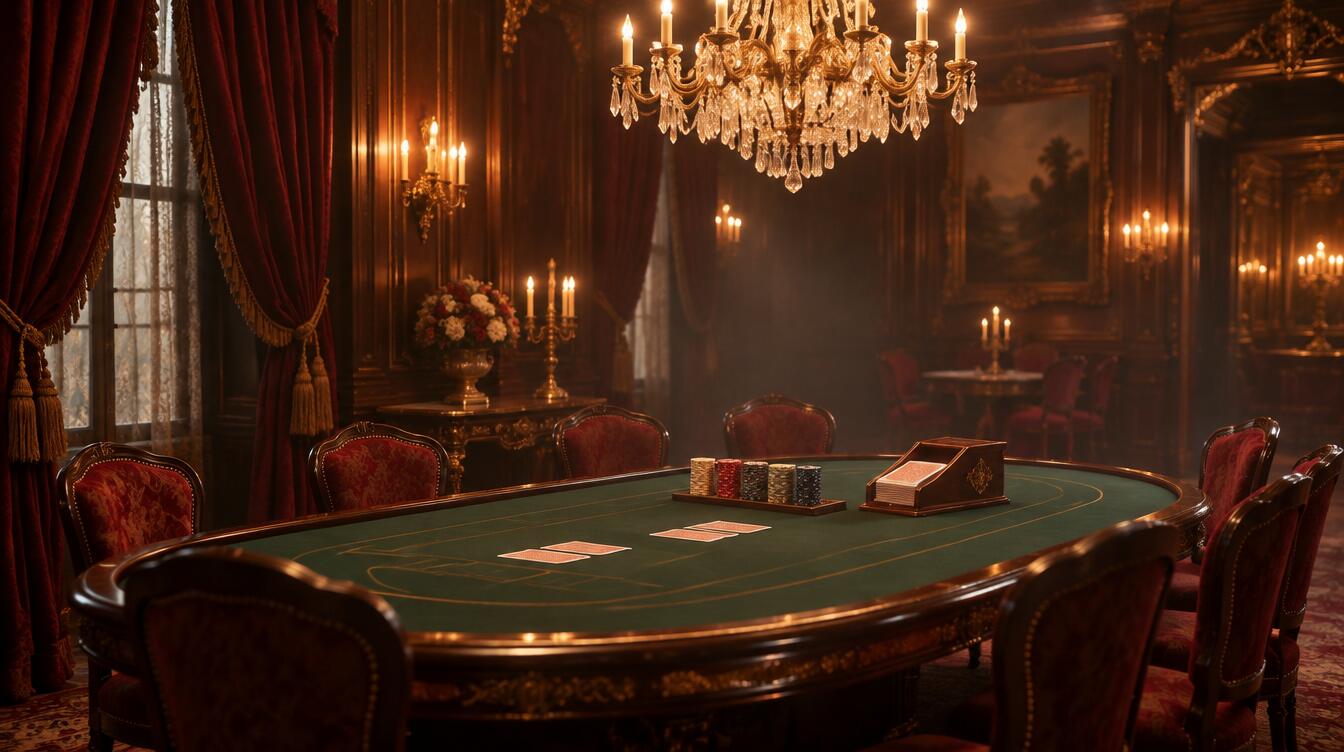
2012年、プロのポーカープレイヤーとして知られるフィル・アイビーは、ロンドンのカジノ「クロックフォーズ」でプント・バンコをプレイし、約770万ポンドを勝ちました。ところがカジノは支払いを拒否します。アイビーは同伴者の Cheung Yin Sun とともに、カードの裏模様のわずかな非対称を見分け、縁起を担ぐふりをしてディーラーに特定のカードの向きを変えさせていたのです。この手法は「エッジソーティング」と呼ばれます。
David Parlett『The Oxford Guide to Card Games』(バカラとマカオの歴史)
Charles Van-Tenac『Album des jeux de hasard et de combinaisons』(1847年)
ネバダ大学ラスベガス校 特別コレクション(サンズ・ホテルの写真資料)
マカオ特別行政区政府 博彩監察協調局(DICJ)の年間統計
英国最高裁判所判決 Ivey v Genting Casinos (UK) Ltd[2017]UKSC 67
A name that means zero
The word baccarat is generally traced to the Italian baccarà, meaning "zero". The name comes from the way tens and picture cards all count as nothing, and a hand totalling zero is still called "baccarat" today. The game is named after its own worst hand.
You will often read that it was invented in fifteenth-century Italy by a man called Felix Falguiere, but no record from the time backs this up. The trail in print begins in nineteenth-century France: a guide to games written by Charles Van-Tenac in 1847 already sets out the rules of baccarat.
The French crystal maker Baccarat, by the way, takes its name from a town in Lorraine and has nothing to do with the game.
An ancestor called Macao
A close relative of baccarat, Macao, was the rage in England in the early nineteenth century. Players tried to make a total close to nine, and fortunes changed hands in London's gentlemen's clubs; the dandy Beau Brummell is said to have been among those it ruined. That baccarat would later become the favourite game of the real Macau is a curious twist of fate.
A nickname from the railway
The baccarat that spread through nineteenth-century France had the players take turns as the bank. When the banker lost, the shoe moved on to the next player. The way the shoe travelled round the table is said to have reminded people of a train, and the game became known as chemin de fer, French for "railway".
There was also baccarat banque, with one fixed banker playing against two hands, left and right. In both games the players had real decisions, such as whether to draw on 5.
The birth of punto banco
The game played in casinos today is punto banco: every draw is fixed by the rules and the casino is always the bank. It is said to have come from the casinos of 1950s Havana, brought to Las Vegas by a man named Tommy Renzoni and launched in earnest at the Sands in 1959.
The Sands was then the haunt of stars such as Frank Sinatra, and the University of Nevada, Las Vegas holds a 1959 photograph of Sinatra playing dealer at a Sands baccarat table. A game with no decisions to make, with the glamour of European high society, became the high roller's game.
James Bond's game
In Casino Royale (1953), the first of Ian Fleming's novels, Bond's great duel with Le Chiffre is played at baccarat (chemin de fer). In the first film, Dr. No (1962), Bond makes his first appearance at a baccarat table, where he introduces himself as "Bond. James Bond."
The 2006 film of Casino Royale, however, swapped the game for Texas hold'em poker, then at the height of its popularity.
The game that carries Macau
In Asia, and above all in Macau, baccarat is in a league of its own. According to Macau government figures, casino gross gaming revenue in 2024 was about 226.8 billion patacas. VIP baccarat accounted for about 24.1% and mass-floor baccarat for about 60.8%: roughly 85% came from baccarat. Roulette, blackjack and even the slots are bit players.
A love of good omens colours the tables too. Eight sounds like the word for prosperity, which is why side bets such as Panda 8 are popular, while 4 sounds like "death" and is often left out of seat numbers. At high-limit tables, players crumpling the squeezed cards into balls are a common sight.
A court case about the backs of the cards
In 2012 the professional poker player Phil Ivey won about £7.7 million playing punto banco at Crockfords casino in London, and the casino refused to pay. With his companion Cheung Yin Sun, Ivey had spotted tiny asymmetries in the pattern on the backs of the cards and, claiming superstition, persuaded the dealer to turn certain cards round. The technique is known as edge sorting.
Ivey argued that he never touched the cards and had not cheated, but in 2017 the UK Supreme Court unanimously sided with the casino, describing it as a carefully planned and executed sting. In Atlantic City, the Borgata found he had won about $9.6 million at baccarat the same way, and a US federal court ordered the money returned.
The man who "melted" ¥10 billion
One case made baccarat a household word in Japan. In 2011 it emerged that the former chairman of a major paper company, a member of its founding family, had borrowed a total of about ¥10.7 billion from subsidiaries to fund gambling in Macau and elsewhere, mostly at baccarat. He was convicted of aggravated breach of trust under the Companies Act and sentenced to four years in prison, a sentence finalised in 2013. His later memoir was titled Tokeru ("Melting").
With coups that last seconds and no decisions to make, baccarat is a game in which stakes can balloon very fast. That is one more reason every chip on this site is for practice only.
Baccarat by the numbers
With eight decks, one hand or the other has a natural (8 or 9) about 34% of the time. One coup in three is settled by a natural.
A coup uses at least four cards and at most six.
A tie comes up about 9.5% of the time, roughly once every ten coups.
An eight-deck shoe holds 416 cards. Allowing for the burn and the cards after the cut card, a shoe gives about 75 to 80 coups.
Banker wins about 45.9% of coups and Player about 44.6%. The gap is just 1.3 points, balanced by the 5% commission.
Main sources
David Parlett, The Oxford Guide to Card Games (history of baccarat and Macao)
Charles Van-Tenac, Album des jeux de hasard et de combinaisons (1847)
University of Nevada, Las Vegas, Special Collections (Sands Hotel photographs)
Gaming Inspection and Coordination Bureau (DICJ), Macao SAR: annual statistics
UK Supreme Court, Ivey v Genting Casinos (UK) Ltd [2017] UKSC 67
David Parlett《The Oxford Guide to Card Games》(百家乐与 Macao 的历史)
Charles Van-Tenac《Album des jeux de hasard et de combinaisons》(1847年)
内华达大学拉斯维加斯分校 特藏部(金沙酒店照片资料)
澳门特别行政区政府 博彩监察协调局(DICJ)年度统计
英国最高法院判决 Ivey v Genting Casinos (UK) Ltd [2017] UKSC 67
이름의 뜻은 "0"
바카라(baccarat)의 어원은 이탈리아어로 "0"을 뜻하는 baccarà로 여겨집니다. 10과 그림 카드가 모두 0점으로 계산되는 데서 붙은 이름으로, 지금도 합계 0점인 핸드를 "바카라"라고 부릅니다. 게임 이름이 가장 약한 핸드의 이름이기도 한 셈입니다.
15세기 이탈리아에서 펠릭스 팔기에르라는 인물이 고안했다는 이야기가 자주 소개되지만, 이를 뒷받침하는 당시 기록은 발견되지 않았습니다. 문헌으로 거슬러 올라갈 수 있는 것은 19세기 프랑스로, 1847년 샤를 반테나크가 쓴 게임 해설서에 이미 바카라의 룰이 실려 있습니다.
참고로 프랑스의 고급 크리스털 브랜드 "바카라"는 로렌 지방의 마을 이름에서 온 것으로, 게임과는 관계가 없습니다.
바카라의 조상 "마카오"
바카라와 아주 비슷한 옛 게임으로, 19세기 초 영국에서 유행한 "마카오"가 있습니다. 받은 카드로 9에 가까운 수를 만드는 게임으로, 런던의 신사 클럽에서 큰돈이 오갔습니다. 당대의 멋쟁이로 알려진 보 브러멀도 이 게임으로 재산을 잃은 사람 중 하나로 전해집니다. 훗날 바카라가 진짜 마카오에서 가장 사랑받는 게임이 된 것은 참으로 묘한 인연입니다.
철도에서 온 이름
19세기 프랑스에서 퍼진 바카라는 손님끼리 돌아가며 뱅커를 맡는 방식이었습니다. 뱅커가 지면 슈는 옆 사람에게 넘어갑니다. 슈가 테이블을 도는 모습을 기차에 빗댔다고 하며, 이 게임은 "슈맹 드 페르"(프랑스어로 "철도")라고 불리게 되었습니다.
뱅커를 한 사람으로 고정한 "바카라 방크"도 있었는데, 이쪽은 뱅커가 좌우 두 핸드를 상대로 승부합니다. 두 게임 모두 플레이어가 5일 때 카드를 받을지 고를 수 있는 등 판단의 여지가 있었습니다.
푼토 방코의 탄생
지금 카지노에서 즐기는 바카라는 "푼토 방코"라는 형태로, 모든 카드 받기가 룰로 정해져 있고 카지노가 늘 뱅커를 맡습니다. 1950년대 쿠바 아바나의 카지노에서 하던 것을 토미 렌조니라는 인물이 라스베이거스로 들여와, 1959년 샌즈 호텔에서 본격적으로 시작했다고 알려져 있습니다.
당시 샌즈는 프랭크 시나트라 같은 인기 스타들이 모이던 곳으로, 네바다 대학교 라스베이거스 캠퍼스의 자료관에는 시나트라가 샌즈의 바카라 테이블에서 딜러 역할을 맡은 1959년 사진이 남아 있습니다. 판단이 필요 없는 단순함과 유럽 사교계의 분위기가 바카라를 하이 롤러의 게임으로 만들어 갔습니다.
제임스 본드의 게임
이언 플레밍이 1953년에 발표한 007 시리즈 첫 작품 『카지노 로열』에서 본드가 숙적 르 쉬프르와 대승부를 벌이는 게임은 바카라(슈맹 드 페르)입니다. 영화 첫 작품 『007 살인번호』(1962년)에서도 본드는 바카라 테이블에서 처음 등장해 "본드. 제임스 본드"라고 자신을 소개합니다.
다만 2006년 영화판 『007 카지노 로얄』에서는 승부 게임이 당시 인기였던 텍사스 홀덤 포커로 바뀌었습니다.
마카오를 떠받치는 게임
아시아, 특히 마카오에서 바카라는 특별한 존재입니다. 마카오 정부 통계에 따르면 2024년 카지노 총수입은 약 2,268억 파타카. 그중 VIP 바카라가 약 24.1%, 일반 플로어 바카라가 약 60.8%로, 합쳐서 약 85%가 바카라였습니다. 룰렛과 블랙잭은 물론 슬롯조차 조연에 불과합니다.
길흉을 중시하는 문화도 바카라 테이블을 물들입니다. "8"은 번창을 뜻하는 말과 발음이 비슷한 행운의 숫자라 Panda 8 같은 사이드 베팅이 인기이고, 반대로 "4"는 "죽음"과 발음이 비슷해 좌석 번호에서 빠지는 일이 많습니다. 고액 테이블에서는 다 쪼은 카드를 구겨 버리는 호쾌한 손님도 드물지 않습니다.
카드 뒷면 무늬를 둘러싼 재판
2012년, 프로 포커 플레이어로 알려진 필 아이비는 런던의 카지노 "크록포즈"에서 푼토 방코를 해 약 770만 파운드를 땄습니다. 그런데 카지노는 지급을 거부했습니다. 아이비는 동행한 Cheung Yin Sun과 함께 카드 뒷면 무늬의 미세한 비대칭을 구별하고, 미신을 핑계로 딜러에게 특정 카드의 방향을 돌리게 했던 것입니다. 이 수법은 "엣지 소팅"이라고 불립니다.
아이비는 "카드를 만지지 않았으니 속임수가 아니다"라고 주장했지만, 2017년 영국 대법원은 만장일치로 카지노 측의 손을 들어 주며 이를 치밀하게 계획되고 실행된 속임수라고 판단했습니다. 미국 애틀랜틱시티의 보가타에서도 같은 수법으로 바카라를 해 약 960만 달러를 딴 것이 문제가 되었고, 미국 연방 지방법원은 카지노에 돌려주라고 명령했습니다.
106억 엔이 "녹아내린" 이야기
일본에서 바카라라는 이름을 널리 알린 사건도 있습니다. 2011년, 대형 제지 회사 창업주 일가 출신의 전 회장이 마카오 등의 카지노에서 벌인 도박, 주로 바카라의 자금으로 자회사에서 총 106억 8,000만 엔을 빌린 사실이 드러났습니다. 전 회장은 회사법 위반(특별배임)으로 징역 4년의 실형을 선고받았고, 2013년에 형이 확정되었습니다. 이후 출간한 수기의 제목은 『녹아내리다(熔ける)』였습니다.
한 게임이 수십 초면 끝나고 판단의 여지도 없는 바카라는, 그만큼 베팅 금액만 불어나기 쉬운 게임이기도 합니다. 이 사이트의 칩이 모두 연습용인 것도 그 때문입니다.
숫자로 보는 바카라
8덱에서 어느 한쪽이 내추럴(8이나 9)이 되는 것은 약 34%. 세 게임에 한 번은 내추럴로 승부가 납니다.
한 게임에 나오는 카드는 최소 4장, 최대 6장입니다.
타이가 될 확률은 약 9.5%. 대략 10게임에 한 번입니다.
8덱 슈 하나는 416장. 번과 컷 카드 이후를 빼면 한 슈는 대략 75〜80게임이 됩니다.
뱅커의 승률은 약 45.9%, 플레이어는 약 44.6%. 차이는 고작 1.3포인트로, 이를 5% 커미션으로 맞추고 있습니다.
주요 참고 자료
David Parlett 『The Oxford Guide to Card Games』(바카라와 마카오의 역사)
Charles Van-Tenac 『Album des jeux de hasard et de combinaisons』(1847년)
네바다 대학교 라스베이거스 캠퍼스 특별 컬렉션(샌즈 호텔 사진 자료)
마카오 특별행정구 정부 박채감찰협조국(DICJ) 연간 통계
영국 대법원 판결 Ivey v Genting Casinos (UK) Ltd [2017] UKSC 67